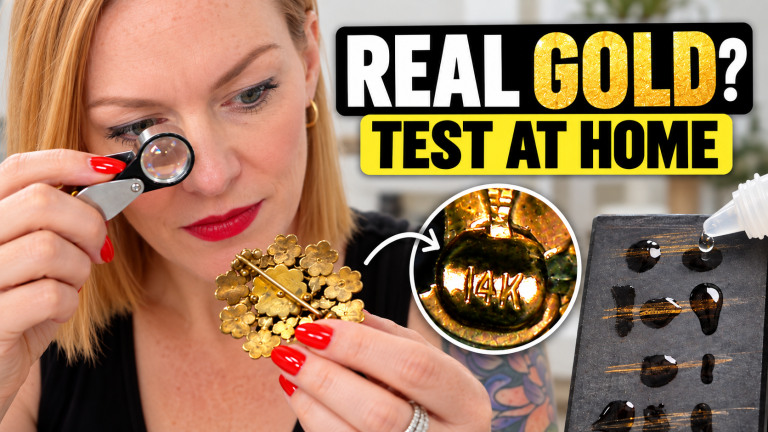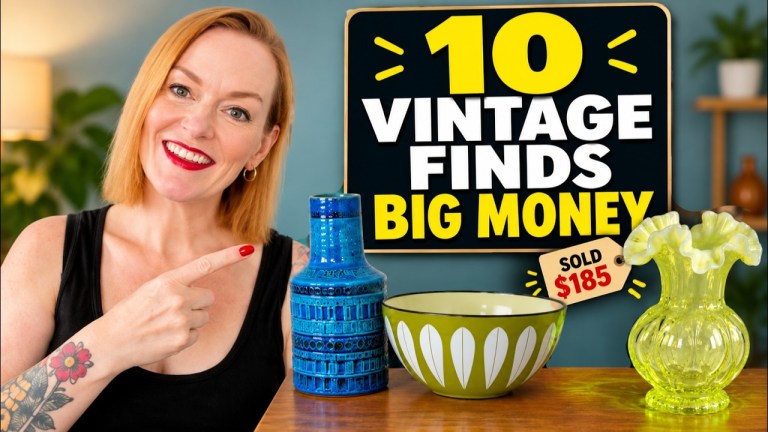
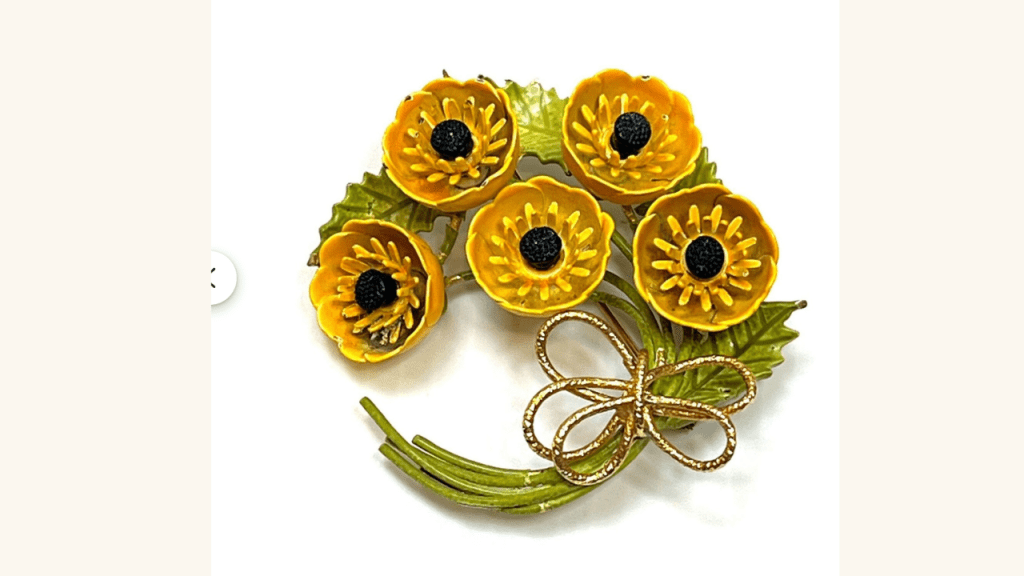
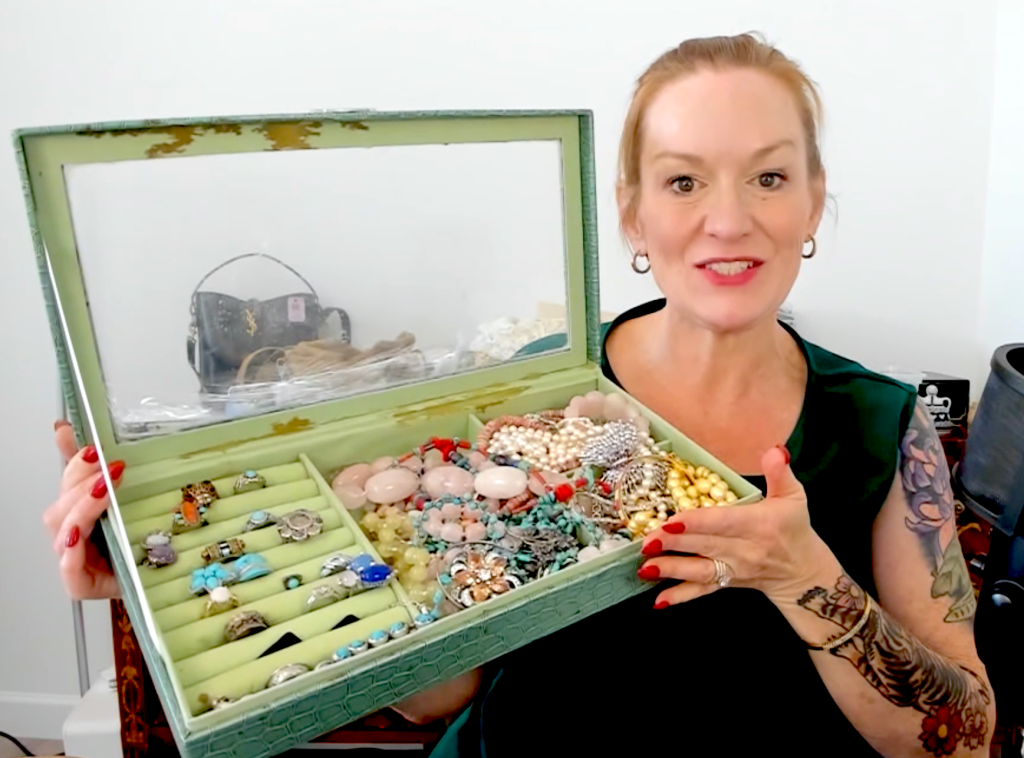
Vintage and costume jewelry being evaluated for resale

How to Know If Jewelry Is Worth Reselling: My 7-Step Checklist

One of the biggest mistakes you can make as a jewelry reseller is assuming that interesting jewelry automatically equals profitable jewelry.

It doesn’t.

A piece can be old.

It can be beautiful.

It can have a recognizable name stamped on the back.

It can even have listings on eBay for $100 or more.

And I may still leave it behind.

When I’m looking at jewelry at a thrift store, estate sale, flea market, or garage sale, I’m trying to answer a much more important question:

Is this particular piece worth my money, time and effort to resell?

Over the years, I’ve developed a fairly simple process for making that decision.

I look at seven things:

  1. Maker, marks, and identifying clues
  2. Material and construction
  3. Condition
  4. Recent sold prices
  5. Current competition
  6. Time and difficulty
  7. Realistic profit


None of these factors works completely on its own.

That’s why learning how to evaluate jewelry can be much more useful than simply memorizing lists of jewelry brands to buy.

FREE Jewelry Reselling Checklist


I created a printable “Is This Jewelry Worth Reselling?” 7-Step Reseller Guide that you can keep on your phone or print and take with you when sourcing.


Is This Jewelry Worth Reselling seven-step jewelry reseller checklist

Watch Me Use This Process on a Real Jewelry Haul


One of the best ways to understand this process is to see it applied to actual jewelry.

In the accompanying video, I go through a jewelry haul piece by piece and show you what catches my attention, what I research, what I think each piece could realistically sell for and whether I would buy it again.

But whether you’re looking at a $3 brooch or a $100 designer necklace, the basic process is the same.

Let’s go through it.

1. Look for Maker's Marks, Signatures and Other Clues

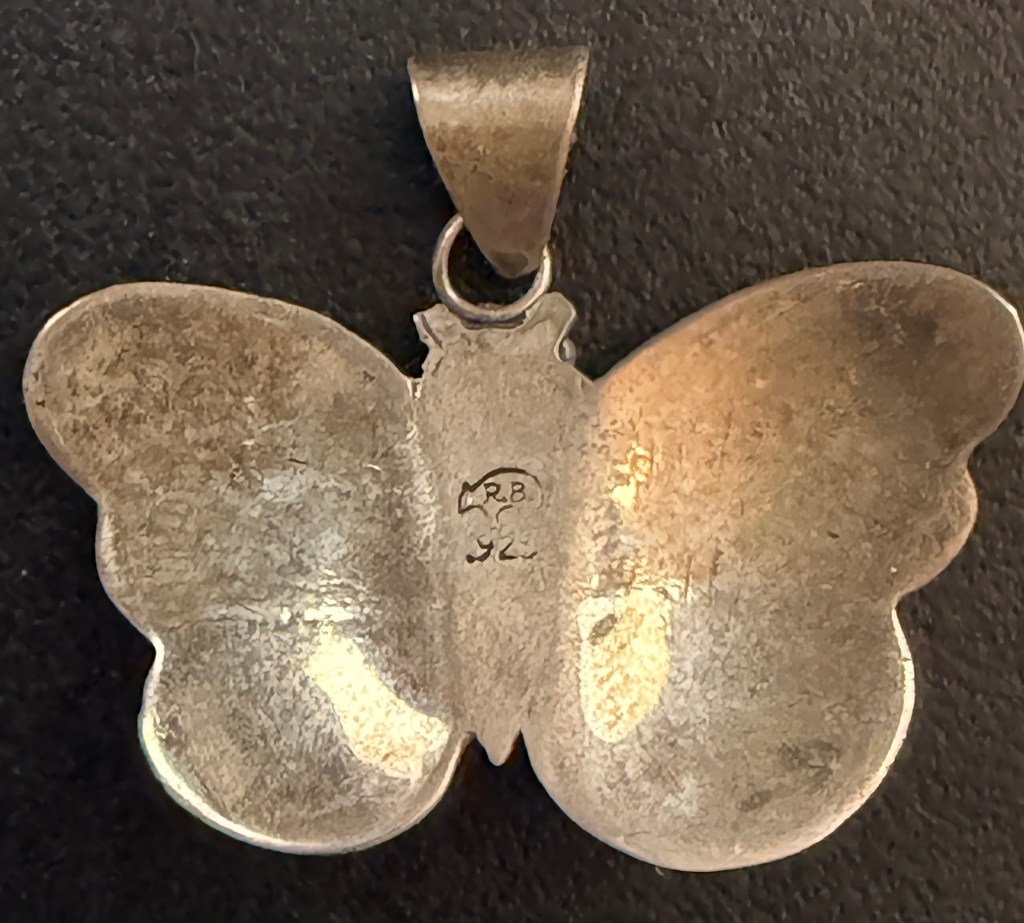
RB Running Bear Workshop Marked 925 Sterling silver butterfly pendant
Look for maker's marks or metal purity stamps

The first thing I usually do is turn the jewelry over.

The back of a piece can sometimes tell you more than the front.

Look for things like:

  • Designer or manufacturer names
  • Logos
  • Hallmarks
  • Metal purity marks
  • Country of origin
  • Patent numbers
  • Copyright symbols
  • Dates
  • Initials
  • Symbols

A name such as Trifari, Givenchy, Monet, Napier, Coro or Weiss, for example, gives me somewhere to begin my research.

But don’t make the mistake of thinking:

Signed = valuable
Unsigned = worthless

Neither is true.

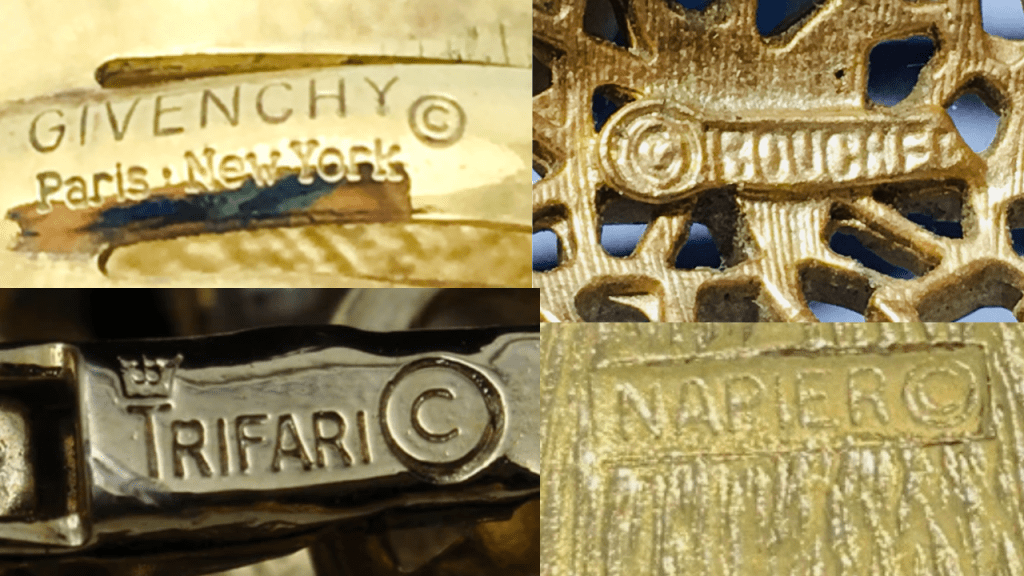
Close-up examples of Givenchy, Boucher, Trifari and Napier vintage jewelry maker's marks
Maker’s marks and signatures such as Givenchy, Boucher, Trifari and Napier can provide important clues when identifying and researching vintage jewelry.


Some signed jewelry is extremely common.

Some unsigned vintage jewelry can be beautifully constructed, desirable and valuable.

The mark is a clue, not your final answer.

Pay attention to how the mark looks, too

The style of a signature can sometimes help determine age.

Companies changed logos and maker’s marks over time. A particular version of a signature may therefore help you narrow down when a piece was made.

That’s one reason I photograph both the front and back of jewelry I’m researching.

2. Identify the Material and Look at the Construction

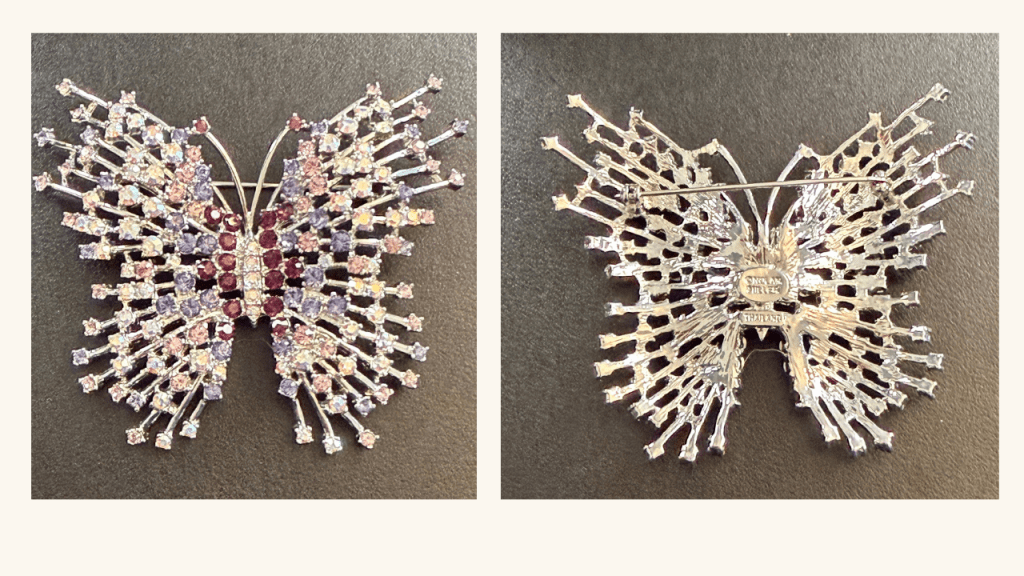
Front and back of a vintage brooch showing jewelry construction and clasp
Turn jewelry over. Clasps, settings, soldering and other construction details can provide clues about quality and age.

Next I want to understand what I’m actually holding.

Is it:

  • Sterling silver?
  • Gold?
  • Gold-filled?
  • Vermeil?
  • Gold-plated?
  • Costume metal?
  • Glass?
  • Rhinestone?
  • Enamel?
  • Natural stone?
  • Plastic or resin?
  • Pearl?
  • Something else?


Sometimes a hallmark gives you the answer.

Other times you’ll need additional research or testing.

But material isn’t the only thing I’m looking at.

Construction can tell you a lot

Look closely at:

  • Clasps
  • Pin mechanisms
  • Earring backs
  • Stone settings
  • Prongs
  • Soldering
  • Chains
  • Hinges
  • Weight
  • Finish
  • How the back of the piece was made


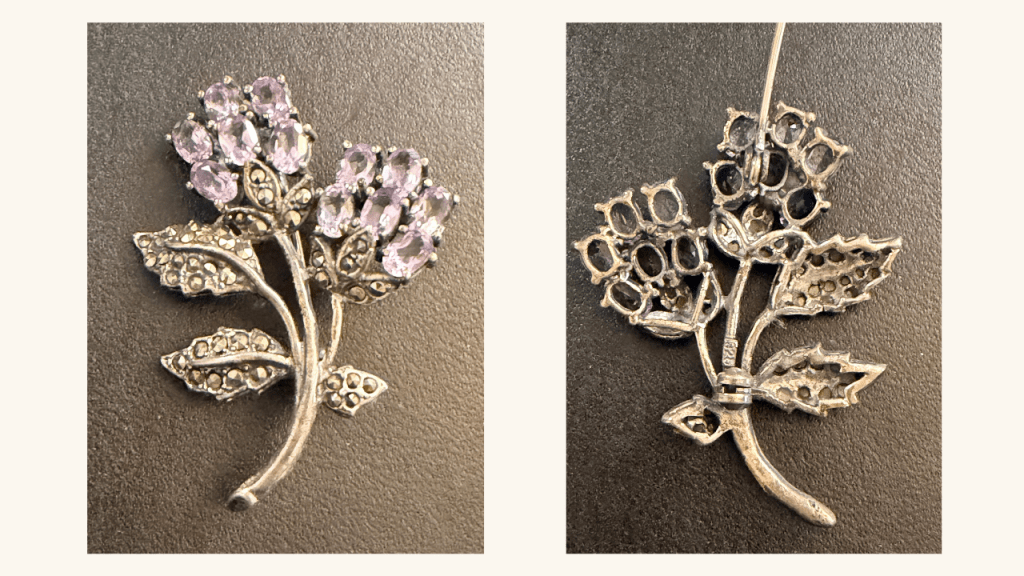
Front and back of a vintage sterling silver brooch showing jewelry construction and clasp
Turn jewelry over. Clasps, settings, soldering and other construction details can provide clues about quality and age. Sometimes there are maker's marks or purity marks.


A well-made piece usually looks well-made from both sides.

And sometimes the construction gives you clues about age or quality even when there is no maker’s mark at all.

3. Check the Condition Carefully

Vintage jewelry showing missing stones and condition wear
Missing stones, repairs, plating loss, verdigris and other condition problems can dramatically affect resale value.

 This is the step that is easiest to skip when you’re excited about a find.

Don’t.

I have learned to slow down and examine jewelry carefully before buying whenever possible.

Look for:

  • Missing stones
  • Loose stones
  • Broken clasps
  • Bent pin stems
  • Missing earring backs
  • Repairs
  • Replaced parts
  • Cracked beads
  • Scratches
  • Chipped enamel
  • Plating loss
  • Discoloration
  • Verdigris
  • Broken chains
  • Missing pieces


Then ask another question:

Does the damage matter to the buyer?

A tiny amount of wear on an antique piece may be completely acceptable.

A missing rhinestone in the center of a highly decorative brooch could dramatically affect its desirability.

Condition also matters when you’re researching prices.

If the $75 sold listing you’re comparing yours to is pristine and your piece has three missing stones, those aren’t truly comparable sales.

4. Research What Similar Jewelry Has Actually SOLD For


This is one of the most important parts of my entire process.

I don’t determine value based solely on what other sellers are asking.

I want to know what buyers are actually paying.

That means checking sold listings.

Let’s say you find a vintage brooch and see five active listings:

  • $129
  • $99
  • $89
  • $75
  • $65


It would be very easy to walk away thinking:

“I have a $100 brooch!”

But then you check recent sold listings and discover comparable pieces actually sold for:

  • $32
  • $39
  • $28
  • $42


That’s an entirely different picture.

Compare as closely as possible

When looking at sold listings, compare:

  • Maker
  • Material
  • Design
  • Size
  • Color
  • Condition
  • Age
  • Completeness
  • Style


I call this comparing apples to apples.

The closer the sold item is to yours, the more useful that sale becomes.

Don’t use the single highest sale as your expected price

If nine pieces sold between $30 and $45 and one sold for $110, I don’t automatically assume mine is worth $110.

I’m looking for the realistic range.

eBay sold listings being used to research vintage jewelry value
Recent sold listings are usually much more useful for estimating resale value than active asking prices.

5. Check the Current Competition

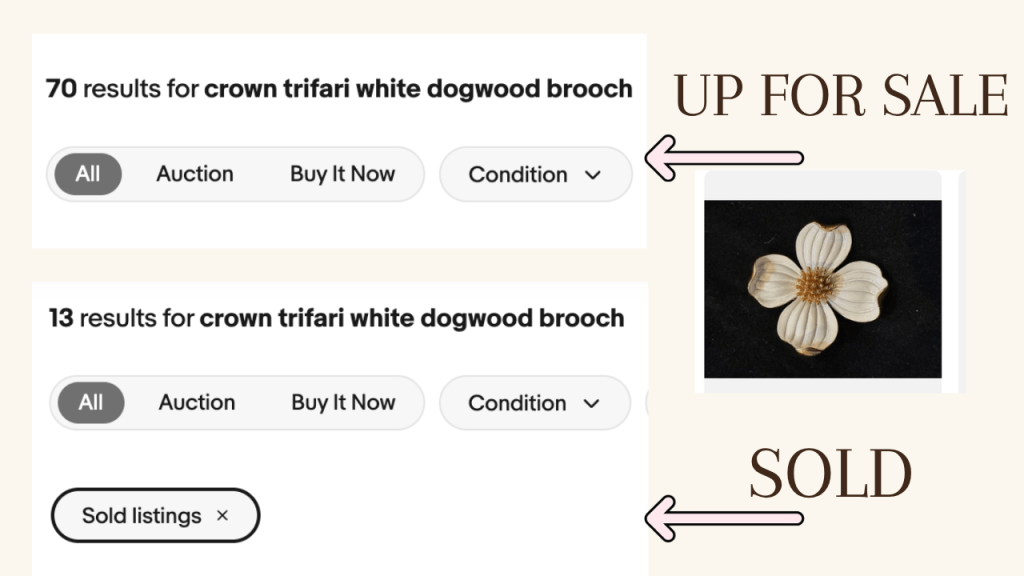
Comparison of active and sold eBay listings for jewelry
Asking prices and actual selling prices can tell very different stories.


This is the part of resale research people often forget.

Something can have good sold prices and still be a questionable buy.

Why?

Because you aren’t only competing against what sold yesterday.

You’re competing against what’s available today.

Search for the same or similar piece and see how many sellers already have one listed.

Imagine two pieces of jewelry both sell for around $50.


Jewelry Piece A

Recent sold price: $50
Currently listed: 3


Jewelry Piece B

Recent sold price: $50
Currently listed: 137

Assuming demand is similar, I would much rather own Piece A.

There are fewer sellers competing for the same buyer.


Ask whether yours has an advantage

Maybe yours has:

  • Better condition
  • A desirable color
  • Original packaging
  • A harder-to-find size
  • A complete set
  • An unusual design
  • Better photographs
  • A lower reasonable price

Sometimes the difference between a mediocre flip and an excellent one isn’t simply value.

It’s supply versus demand.

6. Consider How Much Time and Difficulty Are Involved

This one becomes increasingly important the longer you resell.

A $40 sale isn’t automatically better than a $25 sale.

I ask myself:

How much work is this item going to create for me?

Consider everything involved.

Will it require:

  • Extensive research?
  • Testing?
  • Cleaning?
  • Repair?
  • Complicated photography?
  • Lots of measurements?
  • Special packaging?
  • Difficult shipping?
  • Extra storage space?


One reason I love selling jewelry and other small items is that many pieces are relatively simple to photograph, store and ship.

But even within jewelry, some items require considerably more effort than others.

Your time has value.

7. Calculate a Realistic Profit

Buy maybe or leave decision guide for jewelry resellers
I sort potential purchases into Buy, Maybe or Leave instead of assuming every sellable item is worth picking up.

Finally, I put everything together.

This is where an item becomes:

BUY

The demand, potential selling price and amount of work make sense for the price I’m paying.

MAYBE

The piece has potential, but I either need more research or need it to be cheaper before I’m comfortable buying.

LEAVE

The margin is too small, competition is too high, condition is too poor or the amount of work simply isn’t worth the likely return.

I’m not simply asking:

“Can I sell this?”

That’s a very different question from:

“Should I buy this?”

Almost anything can sell at the right price.

That doesn’t make everything a good resale purchase.

My Buy, Maybe or Leave Rule


I like thinking about sourcing decisions in three categories rather than forcing everything into buy or don’t buy.

BUY

I have enough information to believe the potential reward justifies the cost and effort.

MAYBE

Something interests me, but I need another piece of information.

Maybe I need to:

  • Research the maker
  • Identify a stone
  • Check sold listings
  • Look for damage
  • Check competition
  • Find out whether it’s complete


If I’m standing in a thrift store, this is when I pull out my phone and start researching.

LEAVE

The numbers don’t make sense.

And this is an important skill to develop.

Leaving something behind isn’t missing an opportunity.

Sometimes leaving something behind is exactly what good sourcing looks like.

What About Jewelry That Isn't Signed?

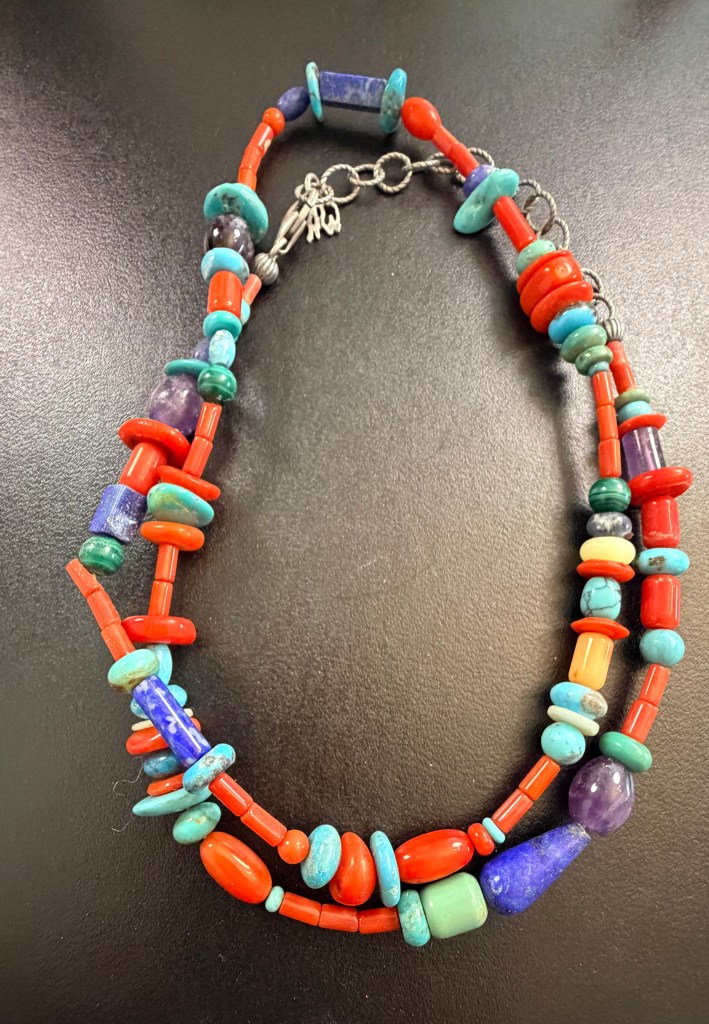
Colorful multi-strand beaded necklace with red, turquoise-colored, blue, purple and green beads
Unsigned doesn't mean worthless. Construction, materials, design and comparable pieces can still provide valuable clues.

Absolutely research it.

I don’t automatically reject unsigned jewelry.

In fact, some of my most interesting finds start with:

“I have no idea what this is.”

That’s when I start looking at:

  • Construction
  • Materials
  • Style
  • Age clues
  • Subject matter
  • Similar pieces
  • Image-search results


Google Lens or another image-search tool can be especially useful for discovering terminology when you don’t know what words to use.

Once you identify the right terminology, go back to eBay and research actual sold listings.

A High Selling Price Doesn't Always Mean a Good Flip

Here’s another trap.

You find something that sells for $100.

Fantastic, right?

Not necessarily.

Suppose:

Purchase price: $65
Likely sale price: $100

Compare that with:

Purchase price: $4
Likely sale price: $35

I’d much rather take a closer look at the second item.

Reselling isn’t just about finding the item with the biggest price tag.

It’s about finding an acceptable relationship between:

cost + risk + time + demand + potential return.

The Biggest Lesson: Learn How to Research, Not Just What to Buy

Unidentified vintage jewelry being researched for resale
You don't need to recognize every piece immediately. Learning how to research unfamiliar jewelry is the more valuable skill.


BOLO lists can be extremely useful.

I make them myself.

But no list can prepare you for every piece of jewelry you’re going to find.

Tomorrow you may walk into an estate sale and find something you’ve never seen before.

That’s why one of the most valuable reseller skills you can develop is learning how to say:

“I don’t know what this is yet, but I know how to figure it out.”

That skill transfers to almost everything you can resell.

Download My Free Jewelry Reselling Guide

Is This Jewelry Worth Reselling seven-step jewelry reseller checklist


Want to take this process with you while you’re sourcing?

I’ve turned the seven steps from this article into a printable Is This Jewelry Worth Reselling? Reseller Guide.

It covers:

Maker & Marks → Material → Condition → Sold Prices → Competition → Time & Difficulty → Realistic Profit

You can save it to your phone or print a copy to keep with your reselling supplies.

Frequently Asked Questions About Reselling Jewelry

How do I know whether thrift store jewelry is valuable?

Start by checking for maker’s marks, hallmarks and metal marks. Then examine the materials, construction and condition. Research comparable sold listings rather than relying only on active asking prices.


Should I only buy signed jewelry to resell?

No. A signature can make jewelry easier to identify, but unsigned jewelry can also be desirable and valuable. Construction, materials, design, age and demand can all matter.


Where can I find the value of jewelry I want to resell?

One of the most useful places to start is recent eBay sold listings. Try to find pieces that closely match yours in maker, material, size, style and condition.


Does vintage jewelry automatically have value?

No. Age alone doesn’t create value. Demand, rarity, maker, materials, design, condition and current supply can all affect what buyers are willing to pay.


What jewelry should a beginner reseller look for?

Rather than trying to memorize hundreds of brands immediately, learn to recognize quality construction, precious-metal marks, designer signatures, interesting materials and unusual designs. Then research before spending heavily.


How much profit should I make on jewelry?

There isn’t one profit amount that works for every reseller. Consider your purchase cost, selling fees, shipping expenses, time, risk and likely selling price. A smaller sale with very little investment may sometimes be more attractive than a higher-priced item with a large buy-in.


Final Thoughts

The goal isn’t to become someone who can identify every piece of jewelry instantly.

I’ve been reselling for years and I still find things that make me say:

“What on earth is this?”

That’s part of the fun.

The skill that matters is knowing what to look at next.

Check the maker.

Look at the material.

Inspect the condition.

Research sold prices.

Check the competition.

Think about the work involved.

Then decide whether the realistic profit makes sense.

Sometimes the answer will be BUY.

Sometimes it will be MAYBE.

And sometimes the smartest — and most profitable — decision is simply to LEAVE IT BEHIND.

share this article:

Facebook
Twitter
Pinterest

Still hunting? Here’s more