Why Sell on eBay? Is It Still Worth It for Beginners?
If you’ve been thinking about selling things online, there’s a good chance eBay is one of the first places you’ve considered.
But is selling on eBay actually worth it?
For a lot of people, I think the answer is yes.
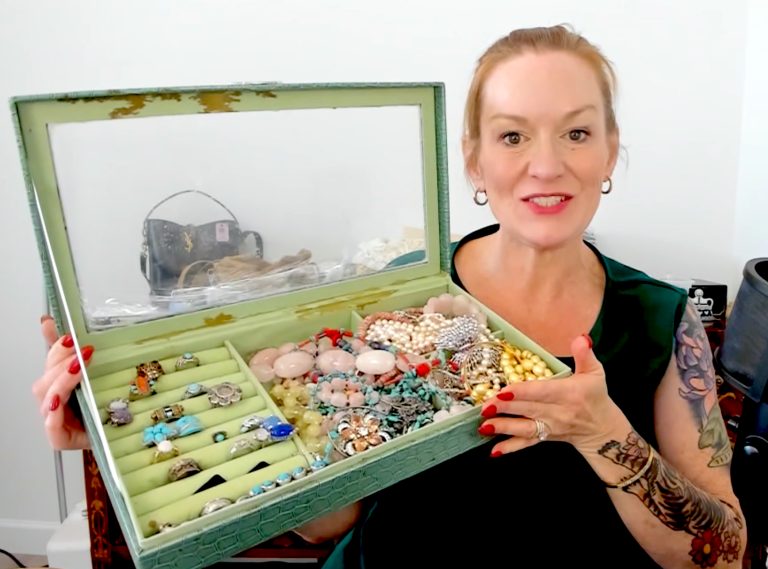
I’ve sold online for years, and while eBay certainly isn’t perfect, it is still one of my favorite places to sell vintage items, jewelry, collectibles and the strange one of a kind things I find at thrift stores, garage sales and estate sales.
The biggest reason is simple.
There are already people on eBay looking for things to buy.
You don’t have to build your own website, find an audience from scratch or convince someone to visit your store before you can make your first sale.
That makes eBay especially useful when you’re just getting started with reselling.
But there are some drawbacks too.
So before you start listing everything in your house, let’s look at why you might want to sell on eBay, what you should know before you begin and whether it makes sense for you.
Is Selling on eBay Worth It?
For me, yes.
But I don’t think that means every item belongs on eBay or that every person needs to turn reselling into a full time business.
eBay works particularly well if you want to:
-
Make extra money selling things you already own
-
Start a small reselling side business
-
Sell vintage or collectible items
-
Sell unusual items with very specific buyers
-
Source inventory from thrift stores, garage sales or estate sales
-
Work from home on your own schedule
You can start with a handful of items and learn as you go.
That is actually how I recommend beginners start.
1. eBay Already Has Buyers
One of the hardest parts of selling something online is finding the person who wants it.
On eBay, those shoppers are already there.
Someone may be searching for a discontinued coffee mug, an old piece of costume jewelry, a replacement lid for a vintage dish, a childhood toy or some strange collectible you found at an estate sale.
That is one of the things I love about eBay.
You don’t necessarily need something that appeals to everyone.
Sometimes you just need to find the person who is searching for exactly what you have.
That makes eBay particularly useful for vintage and one of a kind inventory.
2. You Can Start With Things You Already Own
You do not have to go out and buy inventory to start reselling.
In fact, I recommend that you don’t.
Walk around your house first.
Look through closets, cabinets, drawers, the garage and anything you have been meaning to donate.
You might find:
-
Clothing you no longer wear
-
Electronics
-
Toys
-
Collectibles
-
Jewelry
-
Kitchenware
-
Books
-
Hobby equipment
-
Vintage items
-
Replacement parts
Selling things you already own lets you learn how eBay works without risking much money.
You’ll learn how to photograph an item, create a listing, communicate with buyers, pack an order and ship it.
Then, if you decide you enjoy reselling, you can start looking for inventory intentionally.
3. You Can Sell an Incredible Variety of Things
This is probably one of the biggest reasons I continue to like eBay.
I sell a lot of vintage and unusual items.
Those aren’t always things I could walk into a local store and easily sell.
But online, my customer doesn’t have to live anywhere near me.
That opens up a much larger market for unusual finds.
Vintage jewelry, collectible glass, discontinued kitchenware, toys, replacement pieces, small electronics and obscure collectibles can all have buyers.
Of course, just because something can be listed doesn’t mean it is automatically worth selling.
There is a huge difference between:
Someone has one listed for $100
and
People are actually buying these for $100.
That’s why research is so important.
4. eBay Gives You a Powerful Research Tool
One of my favorite things about using eBay as a reseller is that I can research the market before I buy something.
If I’m standing in a thrift store looking at an item for $5, I can search for similar items and then check what comparable pieces have actually sold for.
This is much more useful than looking only at active listings.
Anyone can ask $200 for something.
That doesn’t mean anyone will pay $200.
Sold listings help me figure out:
-
Whether an item actually sells
-
What buyers have recently paid
-
How often similar items sell
-
Which versions are more desirable
-
Whether condition affects the price
-
How much competition I will have
Learning how to research sold listings is one of the most valuable skills you can develop as a reseller.
5. eBay Is Great for Weird Stuff
This may actually be my favorite reason to sell there.
I like weird things.
Give me a strange piece of vintage jewelry, an odd figurine, an unfamiliar maker’s mark or something I can’t immediately identify and I’m happy.
And eBay is a surprisingly good marketplace for that type of inventory.
The person looking for your item might be searching by:
-
Brand
-
Pattern
-
Character
-
Model number
-
Maker
-
Material
-
Era
-
Theme
-
Size
-
Color
The more accurately you can identify what you have, the better chance you have of connecting that item with the right buyer.
That’s why identification and research are such a big part of reselling.
6. You Can Work on Your Own Schedule
Reselling can be incredibly flexible.
You can photograph five items on Saturday.
Write listings after dinner.
Package orders in the morning.
Go sourcing when your schedule allows it.
You can also decide how large you want your business to become.
Some people simply want to make a little extra money by clearing out their house.
Others build hundreds or thousands of active listings.
There isn’t one correct version of an eBay business.
7. You Can Start Small
You do not need a warehouse.
You don’t need hundreds of listings.
You don’t need a huge investment in inventory.
You definitely don’t need to run out and buy every reseller tool someone on YouTube tells you that you need.
Start with what you have.
Learn the basics.
Sell a few things.
Then decide whether you actually enjoy doing it.
If you do, you can gradually add inventory and improve your process.
8. Selling on eBay Teaches You Valuable Reselling Skills
Even if you eventually sell on several platforms, the skills you learn selling on eBay transfer almost everywhere.
You learn how to:
-
Research an item
-
Identify what buyers are searching for
-
Evaluate condition
-
Take useful photographs
-
Write searchable titles
-
Price inventory
-
Calculate profit
-
Pack items safely
-
Ship efficiently
-
Communicate with customers
And one of the biggest skills you develop is knowing when not to buy something.
That’s just as important as knowing what to buy.
What Are the Downsides of Selling on eBay?
I don’t want to make eBay sound like easy money.
It isn’t.
There are definitely things you need to consider.
Selling fees
eBay charges selling fees, and those expenses need to be included when you’re deciding whether an item is profitable.
Shipping
You have to learn how to weigh, measure, pack and ship your items properly.
That can feel intimidating at first, but it becomes much easier once you’ve done it a few times.
Returns and customer service
Occasionally something goes wrong.
A buyer may have a question, an item may be returned or a package may have a shipping problem.
Selling online means dealing with those situations when they happen.
Competition
You may find an item that sells for $40 and then discover 100 other sellers already have the same thing listed.
That matters.
I look at sold listings, but I also look at the number of active listings I’m competing against.
Not everything sells
This is probably the most important one.
Something being old, collectible or branded does not automatically make it valuable.
You need to research demand before spending money on inventory.
What Should a Beginner Sell First on eBay?
Start with your own stuff.
Seriously.
Pick five or ten things from around your house that you no longer need.
Look them up on eBay.
Check the sold listings.
See whether similar items are actually selling.
Then choose a few good candidates and list them.
I would much rather see someone learn on items they already own than spend $300 buying thrift store inventory before they understand how any of this works.
Once you’ve made a few sales, you can start thinking about sourcing inventory specifically for resale.
My Simple Beginner eBay Plan
If I were starting completely from scratch today, this is what I would do.
Step 1: Find five items around the house
Don’t buy anything yet.
Step 2: Research them
Search eBay and look at both active and sold listings.
Step 3: Choose the best ones
Look for items that have actual sold examples and enough value to justify your time.
Step 4: Photograph everything clearly
Show the front, back, bottom, labels, maker’s marks and any flaws.
Step 5: Figure out shipping before you list
Know approximately how large and heavy the packaged item will be.
Step 6: Create your listings
Use the words buyers are actually using when searching for your item.
Step 7: Learn from the first sale
The first few listings take longer.
That’s normal.
Every sale teaches you something.
Who Is eBay Best For?
I think eBay is especially worth considering if you enjoy:
-
Thrifting
-
Garage sales
-
Estate sales
-
Vintage items
-
Collectibles
-
Jewelry
-
Research
-
Treasure hunting
It can also be a great option if you want a flexible way to make extra money from home.
You don’t have to know everything before you start.
I still research things all the time.
That’s part of the fun.
Frequently Asked Questions About Selling on eBay
Is eBay good for beginner resellers?
Yes. One of the easiest ways to learn is to start by selling a few things you already own. This gives you a chance to practice researching, listing, packing and shipping without investing heavily in inventory.
Do I need an eBay Store to start selling?
You do not need to build a large store before you can begin learning how to sell. Start small, understand the platform and decide how seriously you want to pursue reselling before adding unnecessary expenses.
Can you actually make money selling used items on eBay?
Yes, but profit depends on what you buy, how much you pay, current demand, selling expenses, shipping costs and the amount of time involved.
That’s why I research items before buying them whenever possible.
What is the biggest mistake new eBay sellers make?
For me, one of the biggest mistakes is confusing asking prices with actual value.
Always look at what comparable items have sold for, not just what someone hopes to get.
So, Should You Sell on eBay?
If you’ve been thinking about trying reselling, I think eBay is still one of the best places to learn.
You can start with things you already own.
You can research what buyers have actually paid.
You can reach shoppers looking for extremely specific items.
And you can grow at your own pace.
You don’t need to know everything before you begin.
Start with five things.
Research them.
List them.
See what happens.
And once you start looking around your house like a reseller, don’t be surprised if you suddenly realize you’ve been surrounded by inventory the entire time.
Happy treasure hunting!